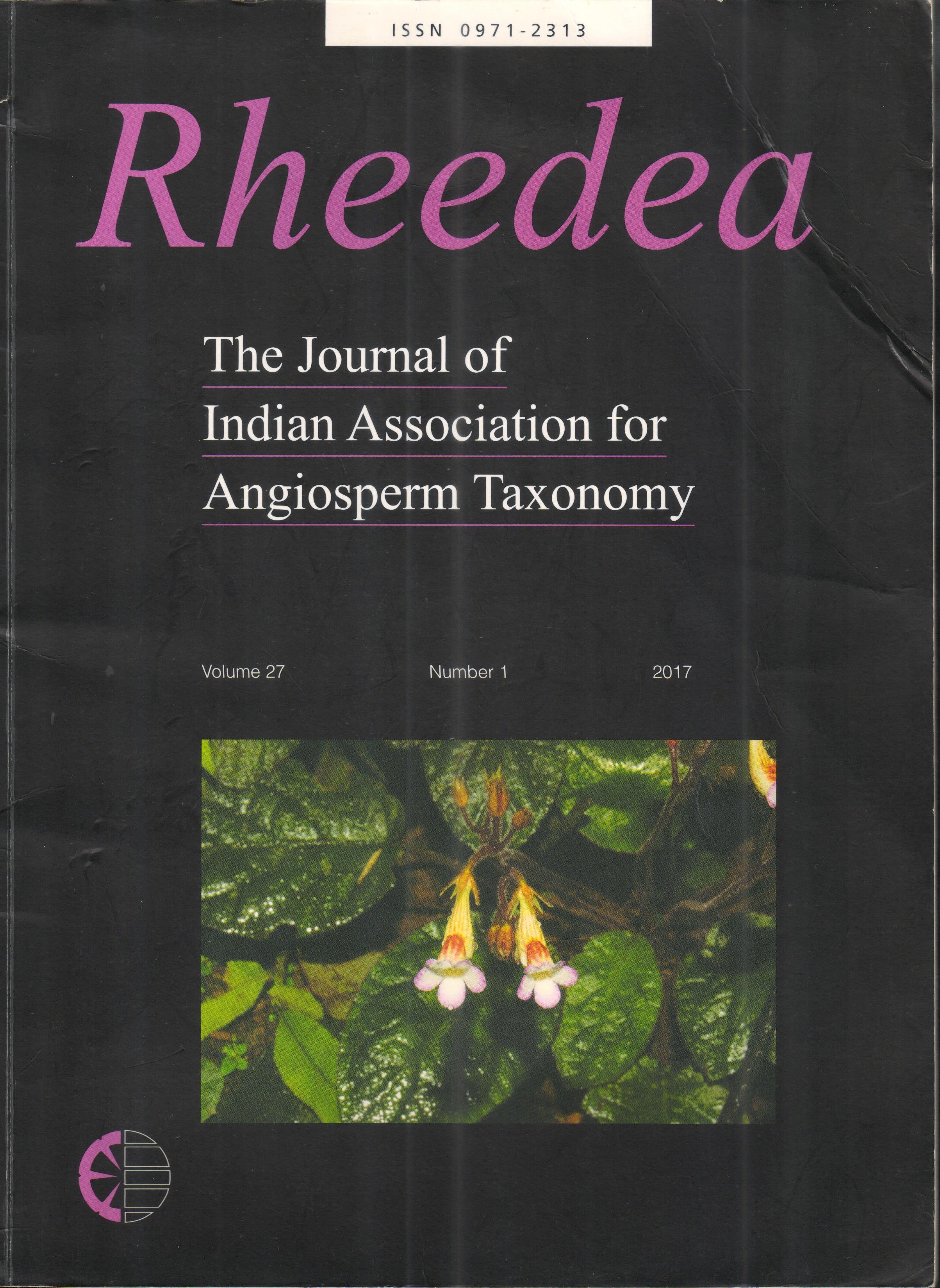
The Gesneriaceae of India: Consequences of updated generic concepts and new family classification
Article Sidebar
Main Article Content
Abstract
For the Gesneriaceae of India the consequences of revised generic circumscriptions and the new classification based on molecular phylogenetic work are summarised and outlined. An identification key, genus descriptions and some considerations on the biogeographic distribution of the genera in India are provided. The current genus count in India is 23, with Briggsia Craib having disappeared and Cyrtandromoea Zoll. being excluded from Gesneriaceae. The Indian species formerly included in Boea Comm. ex Lam. and Paraboea (C.B. Clarke) Ridl. are now included in Dorcoceras Bunge and Middletonia C. Puglisi, respectively. Oreocharis Benth. is newly recorded for India due to the transfer of Briggsia muscicola (Diels) Craib to Oreocharis. The Indian genera are from both tribes of subfamily Didymocarpoideae, namely Epithemateae and Trichosporeae. The genera are represented in three out of four subtribes of tribe Epithemateae and six out of ten subtribes in tribe Trichosporeae, thus, in total the Indian genera are represented in nine out of fourteen subtribes in the subfamily Didymocarpoideae. Subtribe Jerdoniinae is endemic to India. This high level of diversity underlines
the biogeographical and historical importance of India for the family Gesneriaceae.
Article Details
Section

This work is licensed under a Creative Commons Attribution-NonCommercial-NoDerivatives 4.0 International License.
How to Cite